Foundations of Quantum Field Theory
Quantum field theory is the framework through which contemporary physics describes elementary particles and their interactions. It underlies the Standard Model of particle physics and also plays central roles in condensed-matter physics and statistical mechanics.
Its empirical success is extraordinary. Yet its foundations are less straightforward than this success might suggest. Different formulations emphasise different mathematical structures, support different interpretations and answer different scientific purposes. Questions about particles, fields, renormalisation and mathematical consistency therefore remain philosophically important.
From particles to fields
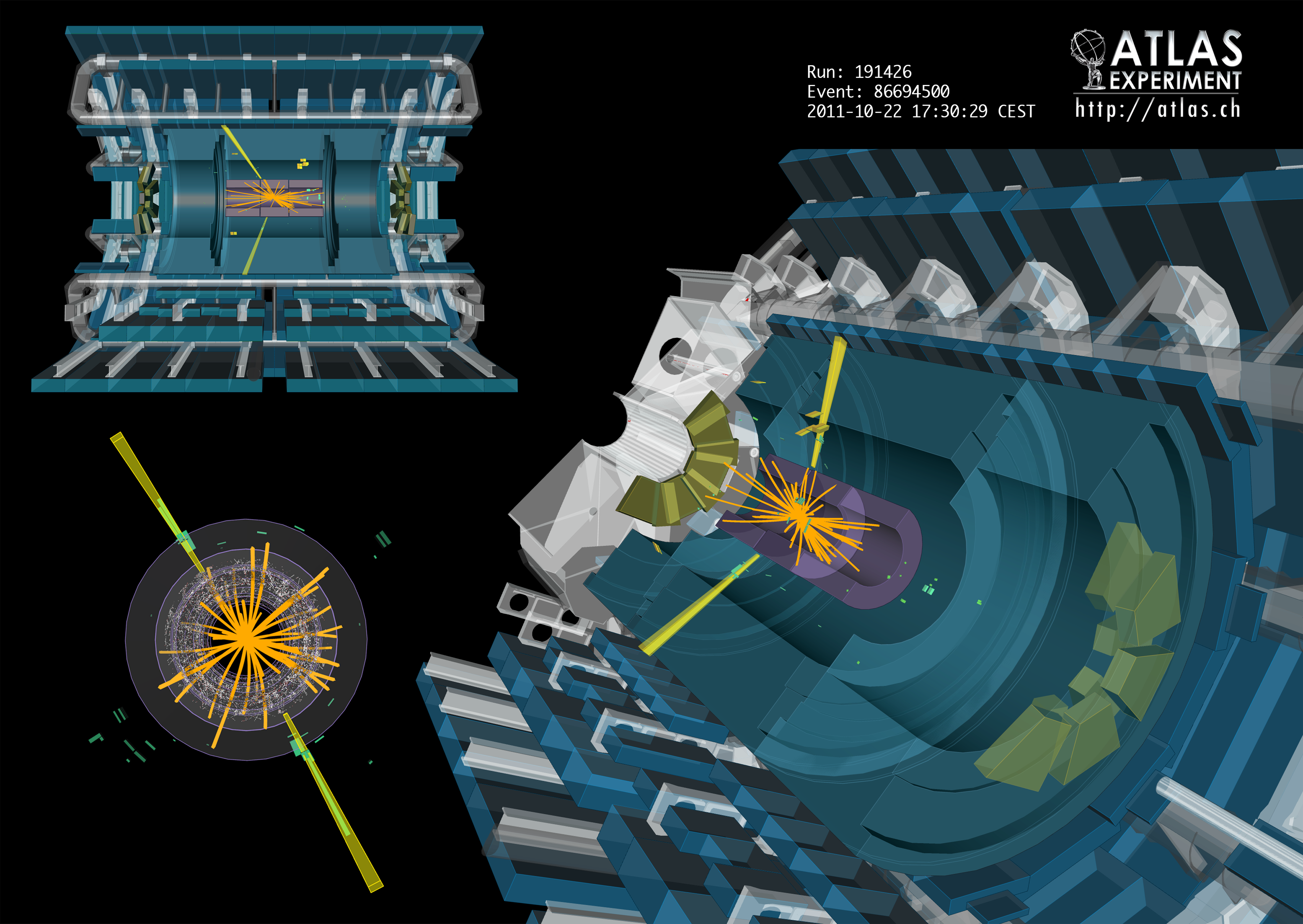
Ordinary quantum mechanics is usually introduced using systems with a fixed number of particles. Relativistic physics makes this picture difficult to sustain. At sufficiently high energies, particles can be created and destroyed, so a theory cannot begin by fixing their number once and for all.
Quantum field theory instead assigns fundamental importance to fields distributed across spacetime. These fields have infinitely many degrees of freedom. Under appropriate conditions, their excitations can be represented as particles with definite masses, energies and other properties.
The familiar statement that particles are "excitations of fields" is useful, but incomplete. Particle representations work especially well for free fields and for scattering experiments in which particles are widely separated before and after an interaction. In interacting theories, curved spacetimes and other settings, particle number may not be uniquely or generally defined. This is one reason why the ontology of quantum field theory remains contested.
What counts as a quantum field theory?
There is no single uncontested formulation of quantum field theory.
Canonical approaches often begin with a classical field theory and quantise it. Perturbative methods then represent interactions as corrections to a simpler free theory. Path integrals provide a closely related calculational framework. These methods form the basis of most successful particle-physics predictions.
More formal approaches proceed differently. Axiomatic, constructive and algebraic quantum field theory seek mathematically controlled representations of fields, states, observables and spacetime symmetries. They make it possible to prove deep structural results, but realistic interacting theories are often much harder to construct within them.
These approaches need not be simple rivals. They may answer different questions. A formulation suited to calculating scattering probabilities need not also provide the clearest ontology or the most rigorous account of local observables. Much of the philosophy of quantum field theory concerns how these different achievements fit together.
Renormalisation
Calculations in quantum field theory frequently produce divergent expressions. Historically, this made the theory appear mathematically suspect. Modern renormalisation theory provides a more systematic understanding of what these divergences mean.
Regularisation first introduces a mathematical device, such as a momentum cutoff, that renders the relevant expressions manageable. Renormalisation then relates the parameters used in the calculation to quantities defined through measurement at a specified scale. Where the method permits, the regulator can subsequently be removed while finite predictions are retained.
Renormalisation is therefore not merely the arbitrary subtraction of infinities. It expresses the fact that parameters such as masses and coupling strengths must be defined in relation to a physical scale and an experimental procedure.
Perturbative calculations organise contributions according to powers of the interaction strength. Feynman diagrams provide compact representations of these contributions. They are calculational devices rather than literal pictures of microscopic events.
The renormalisation group and scale
The renormalisation group studies how a physical description changes as we move between scales.
A system may contain enormously detailed microscopic structure while displaying much simpler behaviour at longer distances or lower energies. Renormalisation-group transformations suppress distinctions that make little difference at the scale of interest. Parameters change, or "run", as the scale changes.
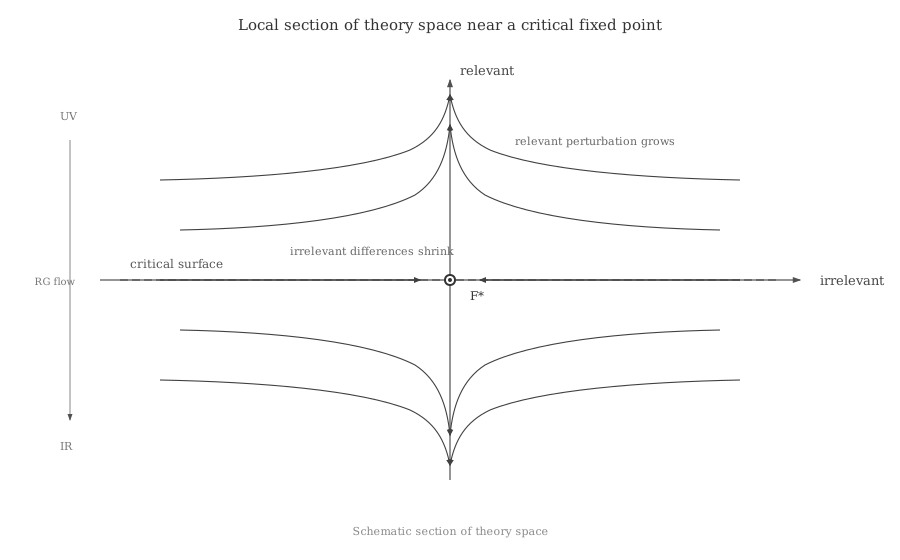
This framework helps explain universality. Systems with very different microscopic constitutions can display the same large-scale behaviour because some of the differences between them become irrelevant under renormalisation-group flow. Fixed points and their surrounding universality classes identify forms of behaviour shared across many underlying systems.
The renormalisation group also raises a philosophical question. If a prediction remains stable across many possible descriptions of unknown high-energy physics, which parts of the successful low-energy theory should we believe?
My research on renormalisation-group realism examines the proposal that features preserved under these transformations are especially credible. Their stability helps explain why effective theories can succeed despite our ignorance of shorter-distance physics. It does not, however, automatically settle what those stable structures represent or how strong our realist commitments should be.
Effective field theories
An effective field theory is designed to describe phenomena within a restricted range of energies. It does not claim to provide the final description of nature at every possible scale.
At low energies, the influence of unknown high-energy physics can often be represented by additional terms whose effects are systematically suppressed. The theory can then make reliable predictions without specifying the complete underlying theory. Its restricted domain is not an embarrassment added after the fact. It is part of the theory's structure.
This changes the traditional picture of theoretical progress. A successful theory need not be either fundamental or false. It may identify real, stable and explanatory structure at one scale while leaving open what happens at another.
My work on effective theory building and manifold learning develops this idea further. Both effective theories and dimensional-reduction methods exploit regularities that allow complex systems to be represented using fewer relevant variables. Scientific understanding often depends not on retaining every microscopic detail, but on identifying the structure that matters for the problem at hand.
Haag's theorem
Haag's theorem exposes a particularly striking tension between the mathematical foundations and the successful practice of quantum field theory.
The standard interaction picture begins by separating a system into a free part and an interacting part. The free field operators evolve under the free Hamiltonian, while the interaction governs the evolution of states. A unitary transformation is then expected to connect the free and interacting descriptions.
Roughly, under the assumptions of Haag's theorem, a field that is unitarily related to a free field in the required way must itself be free. The interaction picture therefore appears unable to represent a genuinely interacting relativistic quantum field.
This is troubling because interaction-picture methods and the perturbative calculations built from them have generated many remarkably accurate predictions. The theorem appears to place mathematical reasoning and successful scientific practice in conflict.
How Haag-tied is QFT?
There is broad agreement about the formal theorem, but much less agreement about what should follow from it.
Some authors take Haag's theorem to show that the interaction picture rests on inconsistent assumptions and should be replaced by a more rigorous framework. Others argue that regularisation and renormalisation remove or alter assumptions required by the theorem. Still others regard it as evidence that quantum field theory requires new mathematical structures, new physical principles or a different interpretation.
In "How Haag-Tied is QFT, Really?", Chris Mitsch, Marian Gilton and I analyse these responses using three questions:
- What exactly is the problem revealed by Haag's theorem?
- What repair is proposed?
- What longer-term renovation of quantum field theory is thought necessary?
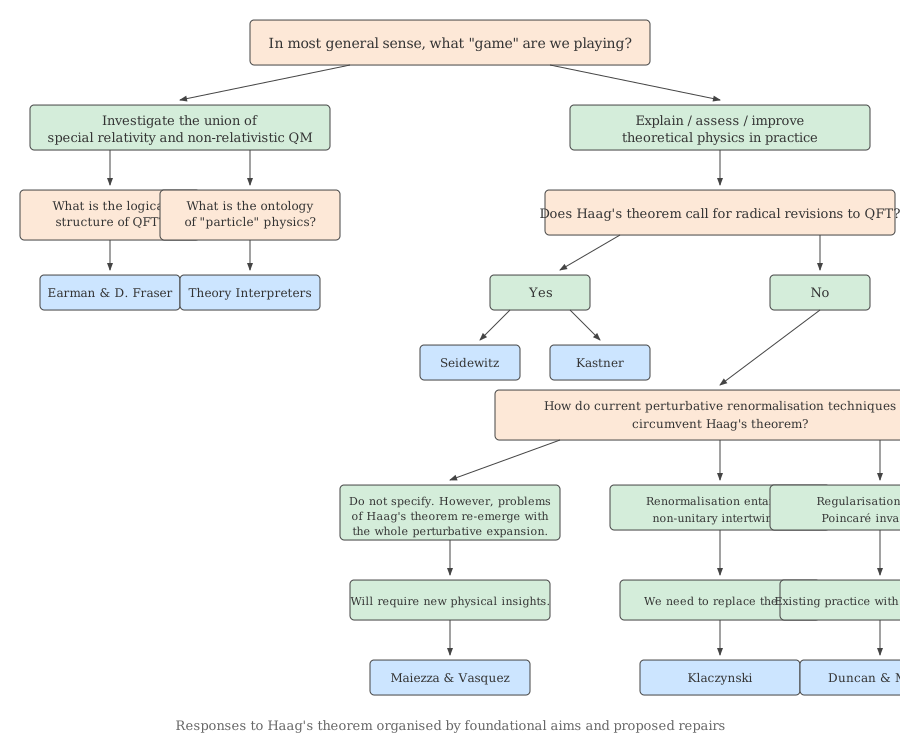
Our conclusion is not a simple conviction or acquittal of perturbative quantum field theory. Haag's theorem is not a self-interpreting verdict. Its significance depends partly on what one expects a foundation for quantum field theory to accomplish.
A mathematician seeking a rigorous model of interacting fields, a physicist calculating scattering probabilities and a philosopher investigating the ontology of particles may legitimately demand different things from the theory. Their disagreements about Haag's theorem can therefore reflect deeper disagreements about the nature and purpose of foundational research.